


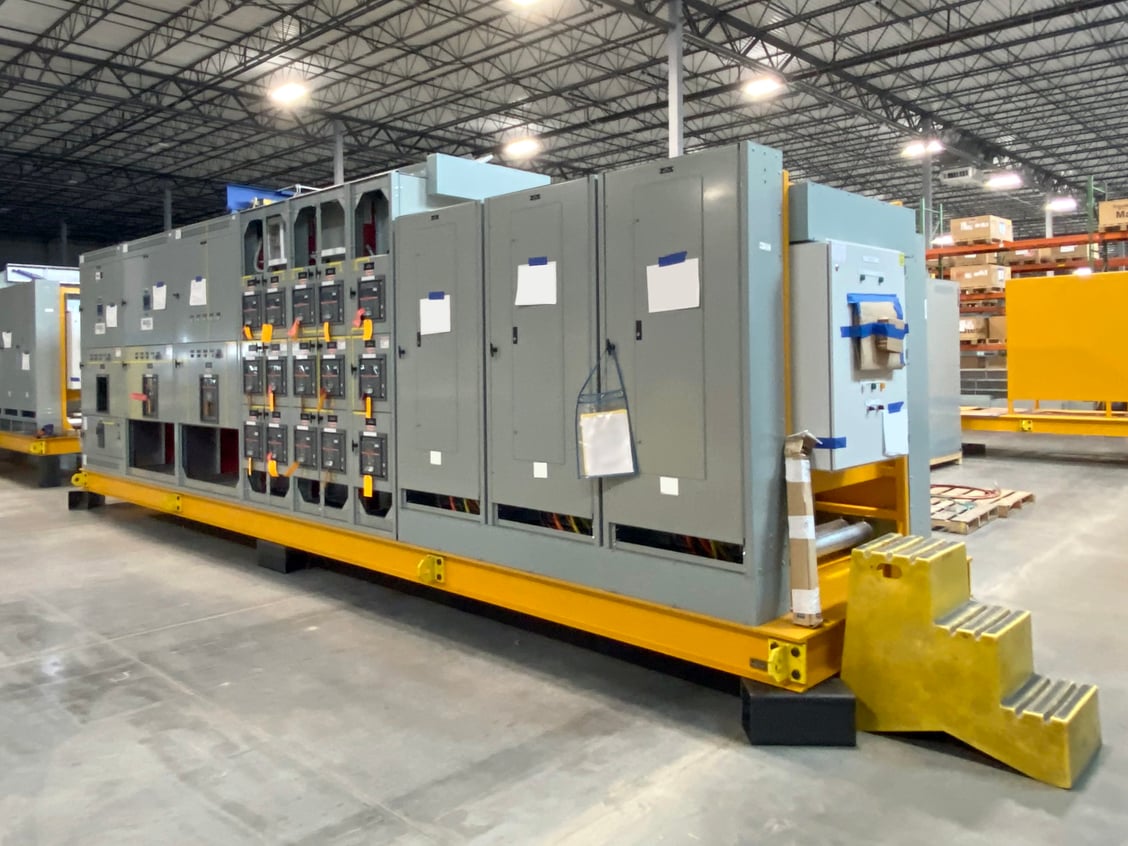
This blog is part two of a three part series exploring how modular electrical skids are changing data center construction. Read part 1 here: What to Look for in a Modular Skid Provider
Electrical contractors carry the weight of some of the most technically demanding jobs in modern construction. That pressure is especially heavy in data centers, where owners expect rapid deployment, unmatched reliability, and seamless integration across electrical, mechanical, and IT systems. But traditional electrical buildouts, which depend on field assembly, weather‑impacted labor, and complex scheduling between multiple vendors, are often unable to meet the pace of today’s data center projects.
Modular skids shift the most labor‑intensive and risk‑prone portions of electrical work offsite into a controlled factory environment. A process that once required weeks of onsite effort can often be completed in just days. For contractors working under compressed timelines or limited manpower, modular construction provides a better path to predictable site construction and energization.
Why Traditional Buildouts Slow Contractors Down
Traditional site‑built electrical systems introduce complexity at every phase of installation. Contractors must coordinate the arrival of individual switchgear sections, UPS units, transformers, controls panels, structural bases, and protective devices, each from different vendors, each with its own lead time. Even when deliveries happen on schedule, contractors face the reality of congested jobsites, limited staging areas, and constrained crane paths that make equipment placement unpredictable.
Field conditions can complicate matters further. Uneven pads, misaligned conduits, and crowded walkways force contractors to adapt their installation strategy on the fly. Cold, heat, moisture, and mud all decrease productivity and create opportunities for errors. Under shrinking timelines, these disruptions compound quickly. Every piece of equipment that must be aligned, anchored, wired, torqued, and tested onsite is another chance for a schedule slip and another layer of coordination for contractors.
How Modular Skids Simplify Jobsite Execution
Modular skids minimize this risk by moving equipment integration and assembly into controlled indoor environments and replacing dozens of individual deliveries with a single, unified system.
Contractors transitioning from traditional buildouts to modular skids notice the difference immediately. Instead of receiving separate equipment shipments, each requiring its own sequencing, staging, and labor, we deliver a fully integrated skid that is engineered, wired, labeled, and factory‑tested before it ever arrives onsite.
This consolidation dramatically reduces jobsite congestion and complications. Multiple crane lifts become a single, predictable lift. Staging space shrinks. Coordination overhead decreases. Instead of managing vendor delays or delivery changes, contractors focus on what matters: placing the skid correctly and completing the final installation.
Because the bulk of integration occurs indoors, modular skids also shield critical electrical work from weather, improving installation quality and ensuring productivity is not compromised by heat, cold, or precipitation. Contractors spend less time reacting to conditions and more time advancing their projects.
Why Not Just Build It Yourself?
Some contractors attempt to replicate modular skids by assembling equipment in temporary warehouses near the jobsite. While this approach can reduce some field labor, it lacks the engineering rigor, quality systems, and repeatability required for mission-critical infrastructure.
PCX modular skids are not simply preassembled equipment. They are fully engineered electrical systems. Our engineering team optimizes layout, clearances, and routing to reduce skid footprint size by up to 50 percent compared to traditional electrical room layouts. This footprint optimization improves site flexibility, simplifies placement, and reduces structural and trenching requirements.
PCX skids are manufactured under ISO 9001-certified quality systems in North Carolina, delivering consistency and craft that cannot be replicated through ad hoc warehouse assembly. The result is a repeatable, auditable process that scales across large data center builds.
Improved Schedule Predictability Through Parallel Construction
One of the most impactful advantages modular skids offer is the ability to execute field and factory work in parallel. While engineers fabricate, wire, and test the skid at the factory, contractors can simultaneously complete site prep, grounding grids, and underground utilities.
Traditional buildouts force these phases into a strict sequence, while modular skids collapse them to save time. When a skid arrives, the labor‑intensive portion of electrical installation is largely complete. Contractors can anchor the skid, dress conductors, complete terminations, and move toward energization within days.
Skid manufacturers like PCX support this process with early design coordination ensuring conduit patterns, riser locations, trench elevations, grounding interfaces, and equipment clearances align long before concrete is poured. This alignment protects contractors from late rework and preserves the schedule during critical phases.
Factory Testing Reduces Rework
Traditional electrical rooms are difficult to fully test until construction is nearly complete. That often leads to wiring mistakes, device misconfigurations, control logic issues, or integration errors surface at the worst possible time: right before energization.
Modular skid design flips this dynamic. Every skid should undergo a fully Integrated Factory Acceptance Test (FAT) within a controlled environment. This testing includes wiring verification, torque checks, PLC logic loading, breaker and relay operations, interlock validation, HVAC operation, and system‑level energization. By testing the skid as a unified assembly, not just as individual components, skid providers help contractors avoid many of the field‑level troubleshooting that derails timelines.
Vendor Flexibility Protects Preferences
Contractors bring deep familiarity with the OEMs they trust to every project. From UPS systems to breakers to transformers, preferred manufacturers offer custom performance, serviceability, and recognizable maintenance patterns. Modular skids that support vendor‑agnostic designs preserve this continuity.
Rather than being forced into proprietary equipment specifications, contractors can maintain the brands and systems they know, ensuring alignment with owner standards and simplifying long-term maintenance. This flexibility also prevents supply chain disruptions from affecting project schedules. If a preferred OEM faces a lead time constraint, a vendor agnostic modular skid provider can pivot to an alternative with minimal adjustments. Vendor‑agnostic design supports contractor expertise, enhances maintainability, and gives owners the consistency they expect across multi‑site programs.
Onsite Commissioning Simplifies Energization
Even the most perfectly built modular skid still requires careful installation and startup to ensure it performs as designed. That’s why onsite coordination should be treated as an extension of the engineering function. The engineering team should remain engaged at every step of field integration, supporting contractors during rigging and placement, verifying alignment and anchoring, reviewing grounding and terminations, and guiding system energization with the same engineers who validated the skid during factory testing.
This continuity between factory and field eliminates uncertainty when schedules are often the tightest. Engineers understand the skid’s internal systems, so they can quickly diagnose interface questions and ensure the installation follows the original design intent. That expertise also helps contractors integrate the skid smoothly with utility feeds, distribution equipment, and adjacent mechanical systems, reducing the chance of costly rework.
For contractors operating under short timelines or deploying unfamiliar architectures, hands‑on commissioning support is often the difference between an on-time energization and a delayed project.
Scalability Makes Contractors More Competitive
With many data center operators shifting toward larger and faster deployments, repeatability has become a defining advantage. Modular skids support this trend by delivering consistent, scalable electrical architectures that can be replicated across phases or across entire regions.
Contractor crews become more efficient as they install the same skid architectures repeatedly. Installation time decreases, quality increases, and contractors gain a reputation for delivering reliable outcomes under tight schedules. This repeatability is especially valuable in multi‑phase hyperscale deployments, where performance during early phases influences selection for later ones.
Modular Skids Reduce Jobsite Risk
Safety is always top‑of‑mind for contractors, and modular construction significantly minimizes onsite risk. Modular skids reduce the likelihood of incidents by shifting high‑risk activities like open‑gear handling, assembly, and wiring work into a controlled factory setting. Fewer trades working simultaneously in tight onsite environments lowers the risk of hazards, and contractors spend less time navigating congested equipment rooms.
This safer, more predictable environment helps contractors manage compliance, reduce incident rates, and focus on delivering safe, high‑quality installations.
Modular Skids Deliver a Smarter, Faster Way Forward
Modular electrical skids are reshaping how data center electrical infrastructure is delivered. By moving assembly offsite, optimizing system layouts, reducing footprints, performing factory commissioning, and supporting contractors through onsite energization, PCX modular skids deliver faster timelines with lower risk.
With up to 30 percent faster deployments, up to 50 percent smaller footprints, ISO 9001-certified manufacturing, Level 1–3 factory commissioning, and dedicated program management and onsite support, PCX delivers engineered systems that help contractors succeed under the pressure of modern data center construction.
If you’re evaluating modular skids for upcoming projects or looking for ways to improve predictability, our team can help you assess constructability, evaluate vendor‑neutral designs, and streamline your deployment strategy.
Connect with us today to discuss how modular electrical skids can transform your next project.